The Flowers Don't Ask Anything of You
They just bloom. And sometimes that's exactly what you needed someone to show you.
There's a moment every spring, the soil is still cold, the sky is the colour of old pewter, and you're standing in rubber boots wondering if you've lost your mind. The seed catalogues are dog-eared. The spreadsheets are colour-coded. And somewhere beneath the frost line, ten thousand tulip bulbs are either becoming something extraordinary or rotting quietly in the dark. You won't know which for weeks. That uncertainty? That's flower farming.
I didn't set out to become a flower farmer. Nobody does, really. You start with a row of zinnias in the backyard, then a dahlia tuber a friend gives you, and then suddenly you're googling "how many tulips fit in a quarter acre" at midnight. It's a slow, beautiful kind of falling.
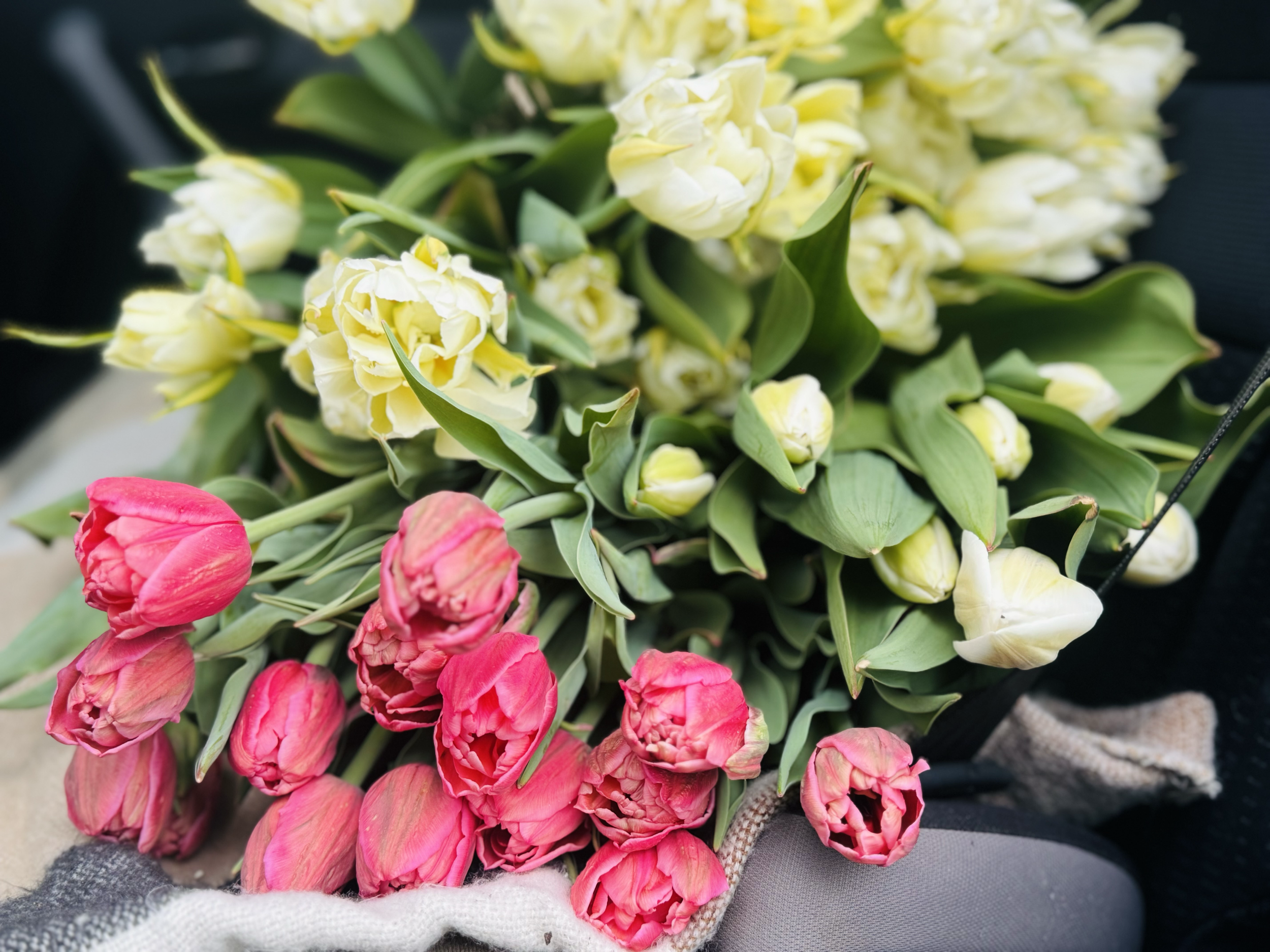
The first tulip harvest, always worth the wait.
The tulips come first. They push through the still-cold earth like small fists of colour, and when you cut the first bunch of the year, stems squeaking against each other, petals still tight, it feels like a promise the world just kept. Those first armloads of pink and butter-yellow doubles, piled in the car, still make me catch my breath every single spring.
But this story doesn't really start with tulips. It starts with the question people ask me most: why flowers?
I grow flowers because they are the opposite of everything that can wait. They bloom on their own schedule, and if you're not paying attention, you'll miss it entirely.
I don't know what you're carrying when you find this place. Most people who come to the farm are carrying something. Not always heavy, sometimes it's just the low hum of too many screens, too many decisions, too many days that looked exactly like the last one. The flowers don't fix that. I want to be honest about that. But they do something else. They pull your attention all the way down into the present tense. A dahlia at peak bloom, rain still on the petals, you can't half-look at that. You're either there, or you're not.
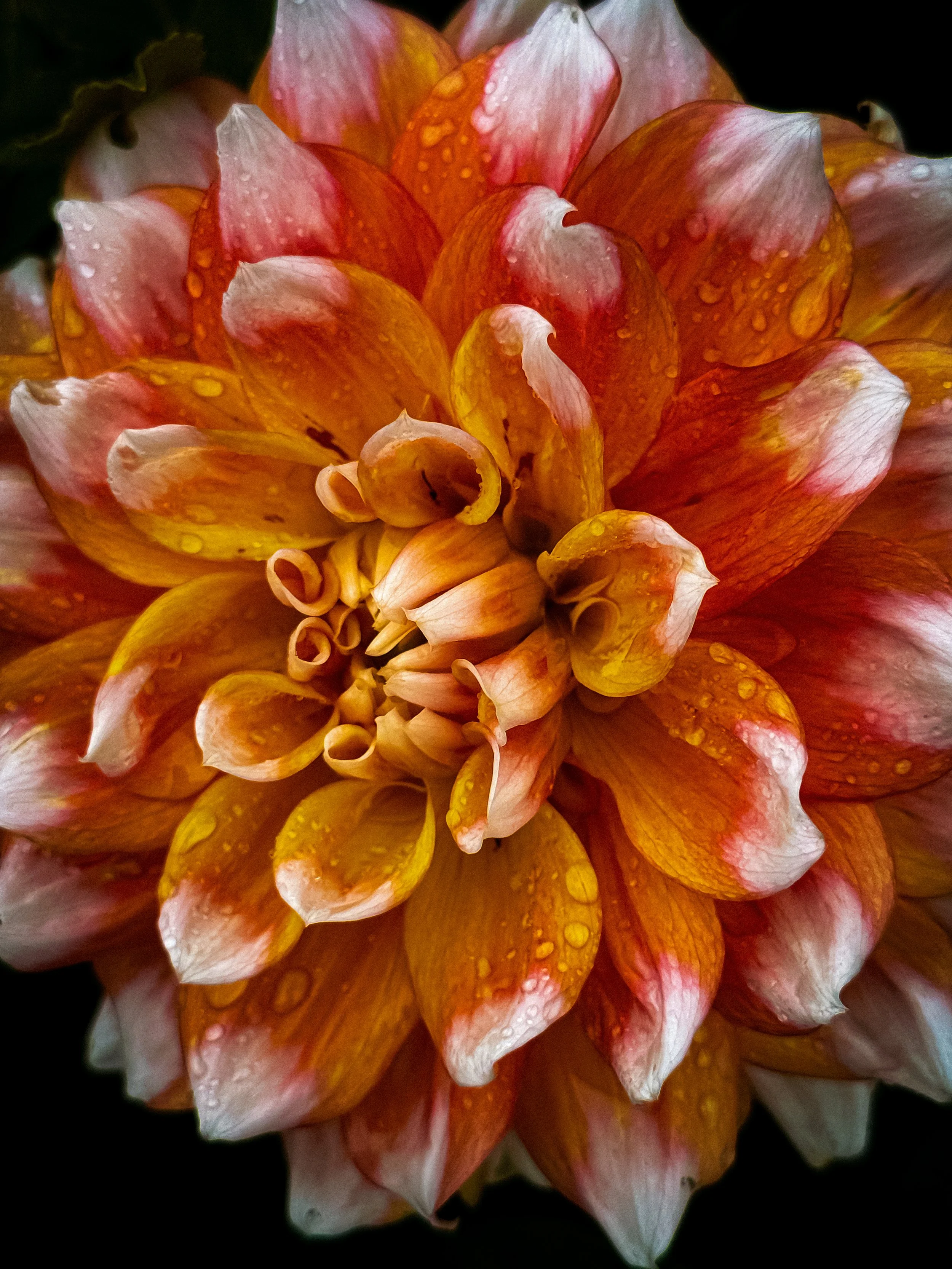
After rain. Every petal holds it differently.
I've watched it happen. Someone walks into the rows a little tight in the shoulders, a little somewhere-else in the eyes. And then they stop. Something catches them, a colour they didn't expect, a stem they want to touch, the smell of the earth warming up in the afternoon. And they come back into their body.
That's not nothing. That's actually quite a lot.
I think it began with needing something that was fully, unapologetically alive. Something that demanded I show up not tomorrow, not next week, but right now, this morning, while the dew is still on the petals and the light is doing that golden thing it does at seven a.m.
So I built a greenhouse. I filled it with seed trays and heat mats and the kind of stubborn hope that gets you through a Canadian spring. I learned that lisianthus takes forever to germinate and that dahlia tubers are fussy about moisture and that roses will bloom for you even when everything else has gone sideways, if you're patient.
The greenhouse became my church. My therapy office. My tiny kingdom of humidity and possibility. Every tray of seedlings was an act of faith, that the weather would cooperate, that the bugs would be kind, that I'd figure out the rest as I went.
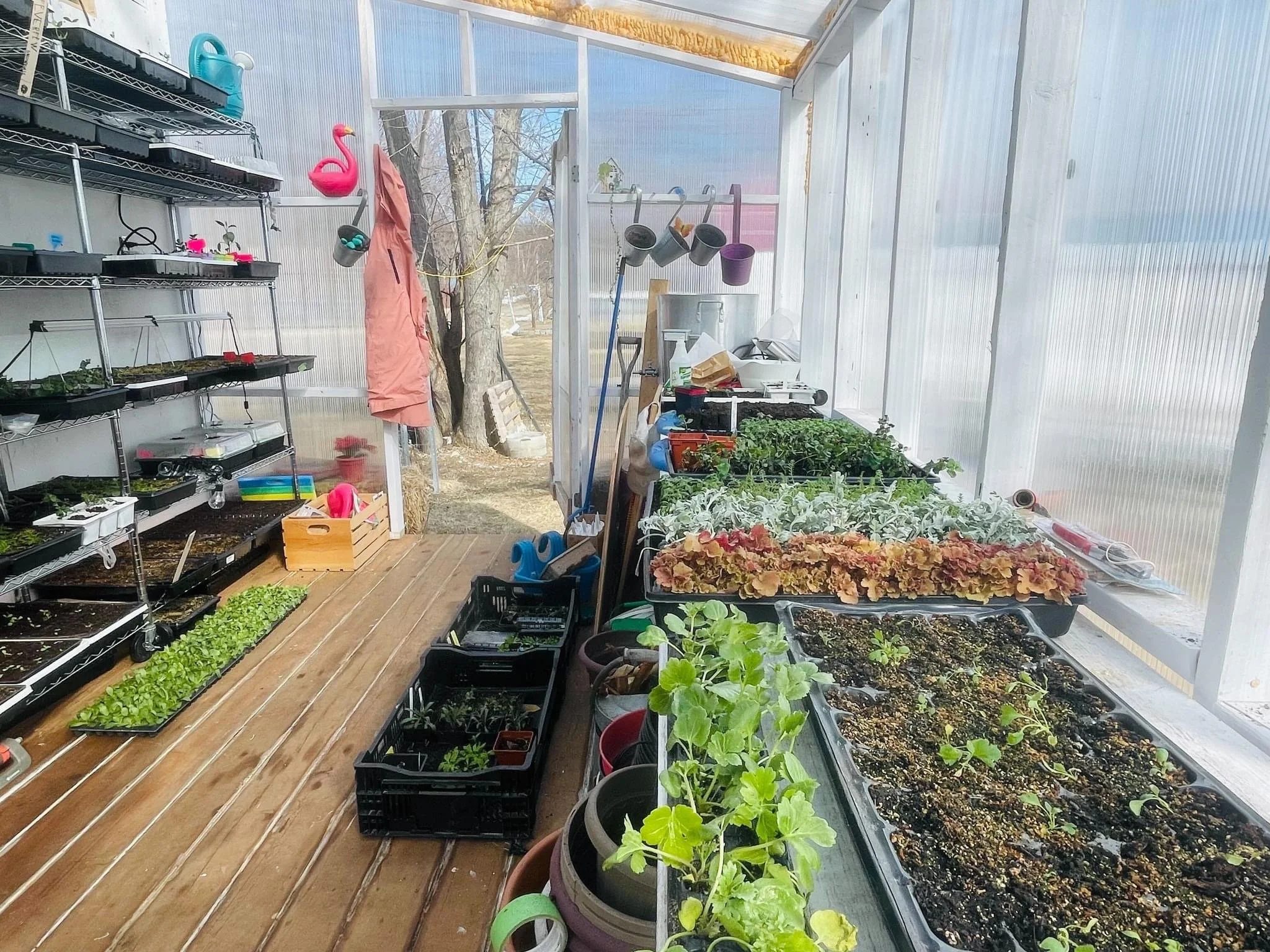
Greenhouse mornings. Dirt under the nails, seeds in the trays, hope in the air.
Joy on a flower farm is quieter than people expect. It's not a big feeling. It's a small one that just keeps arriving, over and over, the whole time you're there. The farm runs along the Ottawa River. Fifty acres. A short, honest Quebec season, May through October; and then the land rests. I grow things here without shortcuts. That means the flowers are slower, and more real, and sometimes imperfect in ways that make them more beautiful.
The Wonder Walk came out of something simple: I wanted to give people a way to be here without an agenda. Not a tour. Not a lesson. Just time on the land, with the flowers, at whatever pace you need. You walk. You look. You cut a few stems to take home. You remember, maybe, what it feels like to want nothing in particular.
Some people bring kids. Some people come alone. Some people cry a little, quietly, in the rows, and don't explain it. That's allowed. The flowers have seen everything.
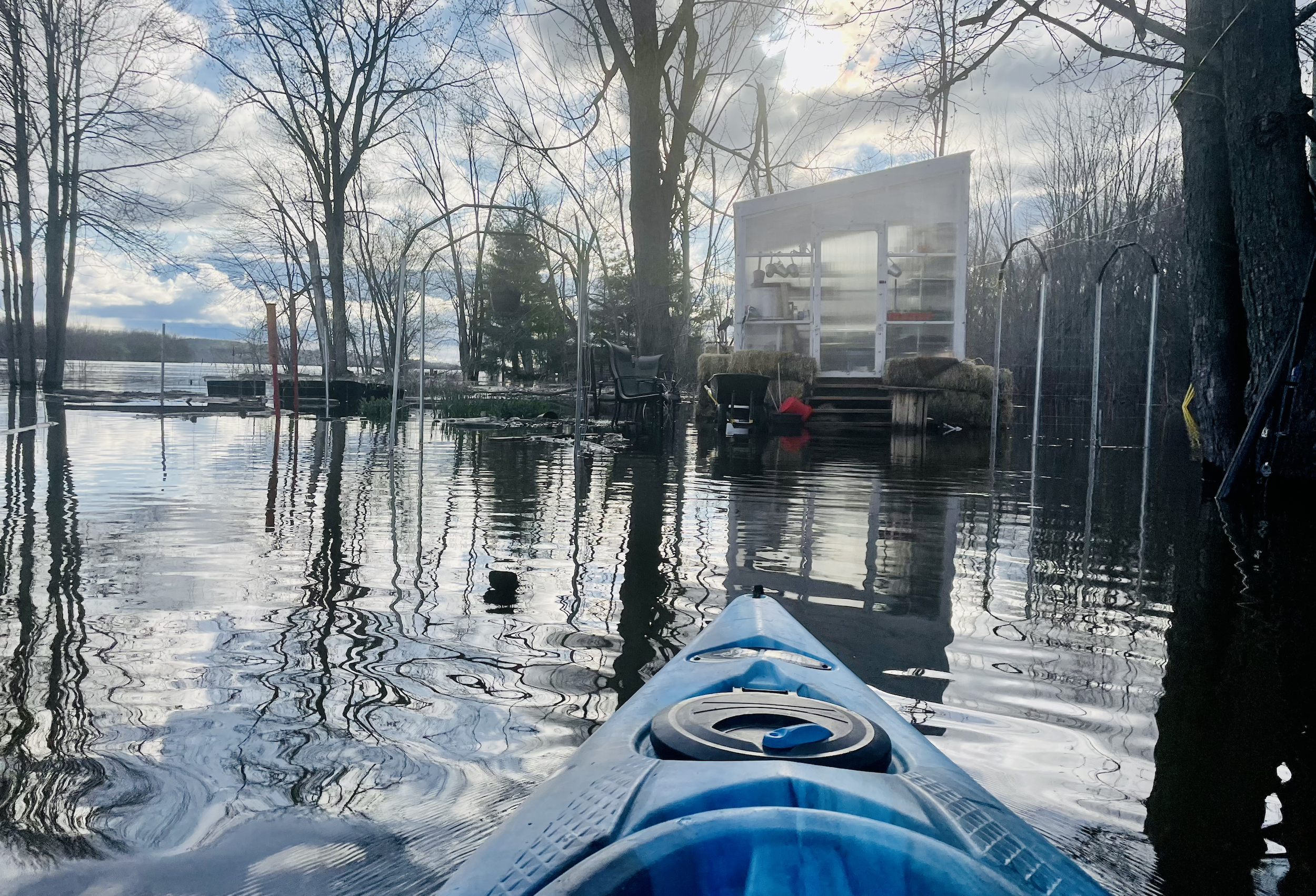
Even when I need to take unconventional methods to arrive in time for “service.”
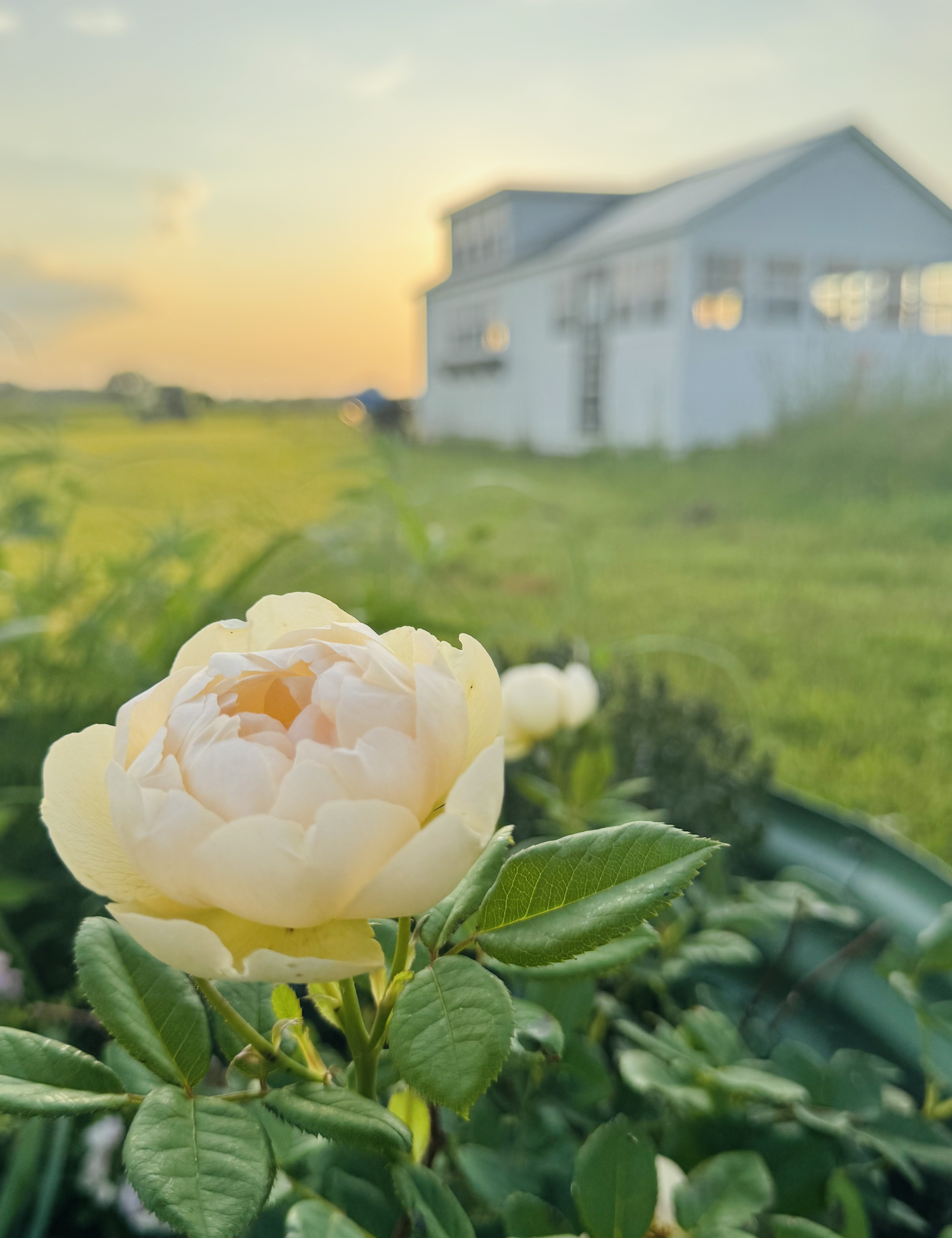
Garden roses after a summer rain. Imperfect, romantic, completely themselves.
And then came summer. The season when a flower farm becomes what it was always trying to be.
The dahlias. Oh, the dahlias. If you've never stood in a dahlia patch at sunset, with a hundred blooms the size of your open hand turning gold in the fading light, I need you to know — it's the closest thing to magic I've found in this life. Each one is different. Each one is showing off. They are the most extravagant, generous, slightly ridiculous flowers on the planet, and I am helplessly devoted to them.
I grow roses, too. Not the stiff, scentless ones from the grocery store. Garden roses — the ones with ruffled petals that look like crumpled silk, that smell like your grandmother's perfume, that hold raindrops in their curves like small, perfect bowls.
And the lisianthus, my stubborn, magnificent lisianthus. They take five months from seed to bloom. Five months of careful watering, temperature watching, gentle encouragement, and occasional swearing. But when they finally open, those ruffled, tissue-paper petals in cream and gold and dusty mauve, every single day of waiting dissolves.
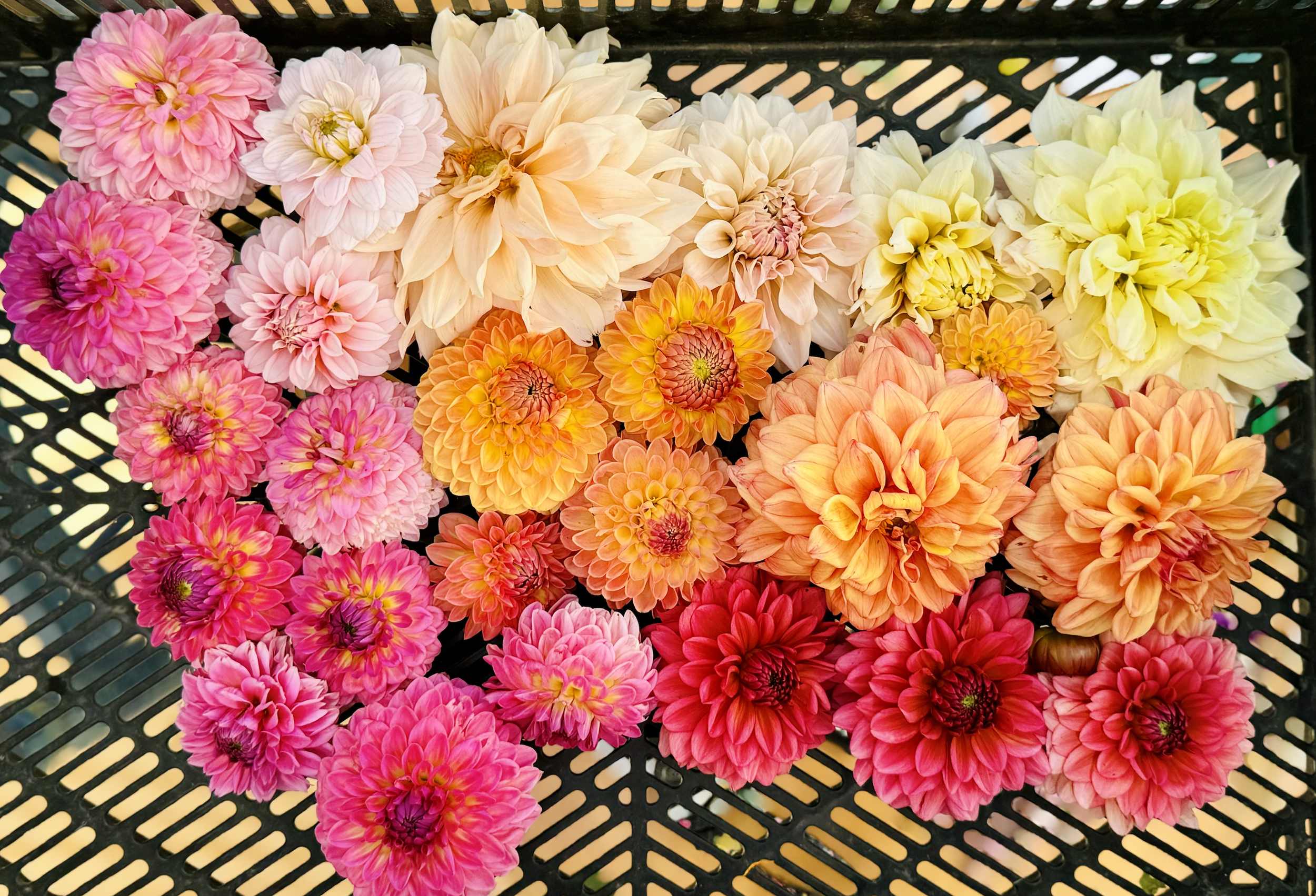
A series of peach, pink, yellow and cream dinner plate dahlias, glowing at golden hour.
Then there are the lilies, the gladiolus, the yarrow and queen anne's lace, the supporting cast that makes every bouquet sing. A bunch of dahlias is gorgeous. A bouquet with dahlias and gladiolus and wisps of greenery? That's a whole story in a jar.
Every arrangement tells a story. These ones whisper about long summer evenings.
Peak season is glorious and relentless. It's the chapter where everything is blooming at once and you can't cut fast enough. The bouquets practically make themselves — deep burgundy pompon dahlias beside blush lisianthus, queen anne's lace floating above it all like white lace. You carry them to the stand, to the market, to the neighbours who probably think you're slightly unhinged. And you are. Happily, beautifully unhinged.
But I'd be telling you a fairy tale if I stopped there.
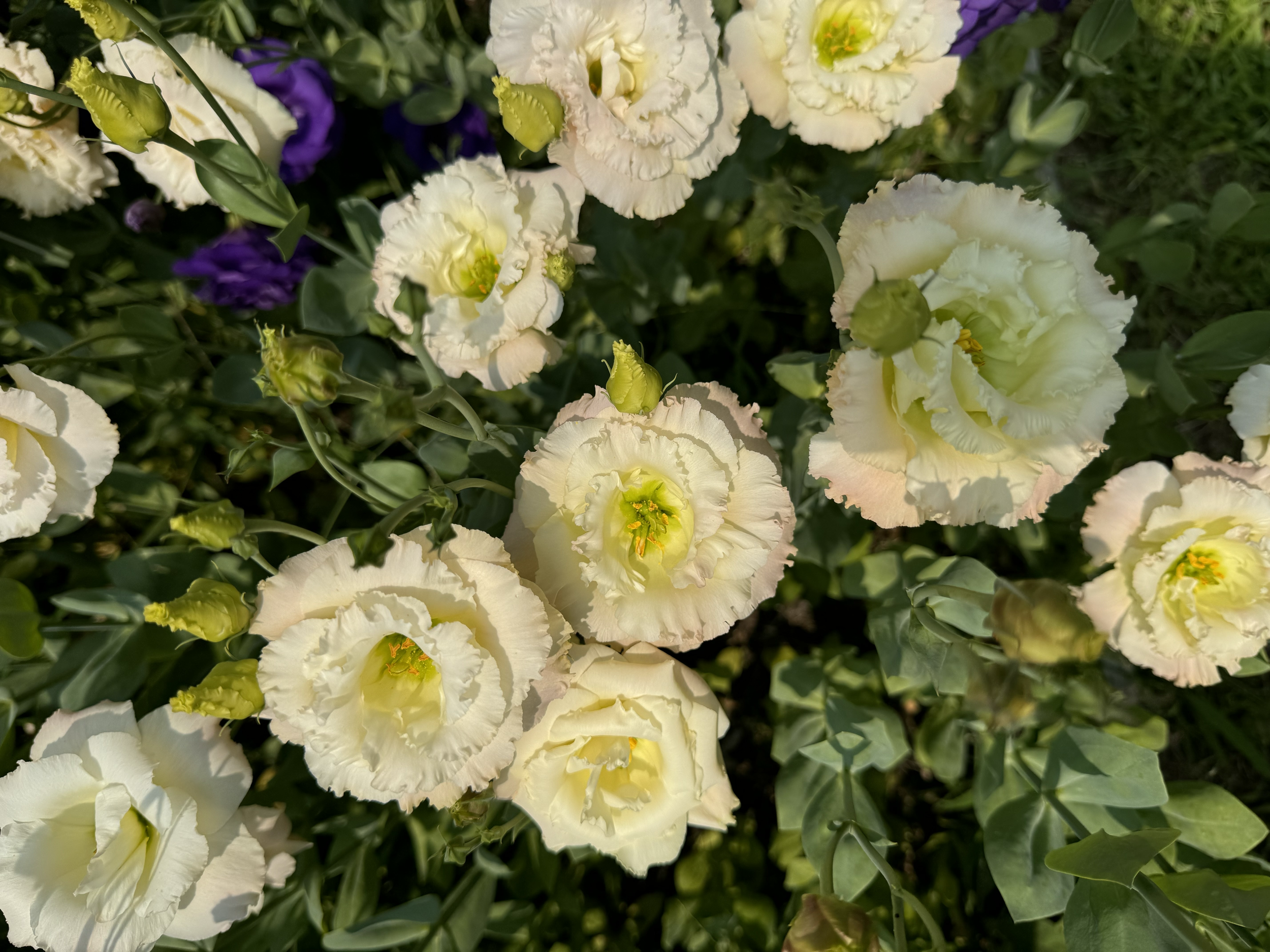
Lisianthus in the field, cream and blush and pale green, like a watercolour painting come to life.
Because flower farming next to water is a love story with a plot twist. The same river that gives us soft morning light and sunset reflections also rises. Sometimes gently. Sometimes not.
There's a photo in my phone I almost didn't include here. An inflatable boat tied to what used to be dry land. Shipping containers half-swallowed by brown water. Our property, transformed overnight into something unrecognizable. That photo is as real as the dahlias. As true as the tulips. It's part of this story because it's part of every farming story, the chapter where nature reminds you that you were never in charge.
You can sandbag. You can plan. You can move everything you love to higher ground. And sometimes the water comes anyway. That's the deal. You don't get to grow things this beautiful without accepting that you might lose them
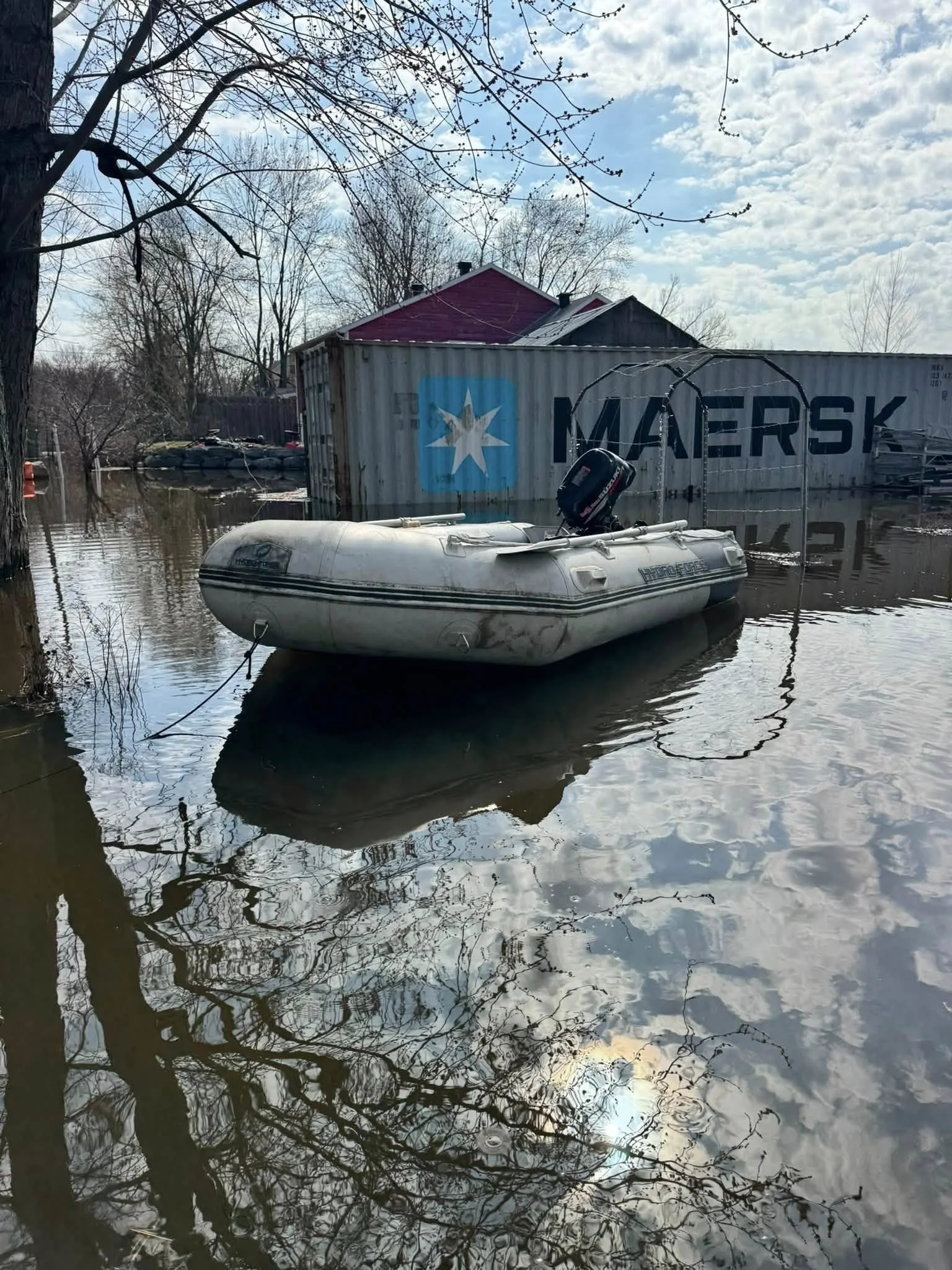
The other side of the story. When the river decides it wants more room.
You don't get to grow things this beautiful without accepting that you might lose them. That's not a tragedy. That's the whole point. And every single spring, when the water recedes and the soil dries and I'm standing there in those same rubber boots, I plant again. Not because I'm naive. Because I've seen what comes next. I've held it in my hands, dewy, fragrant, ridiculously alive.
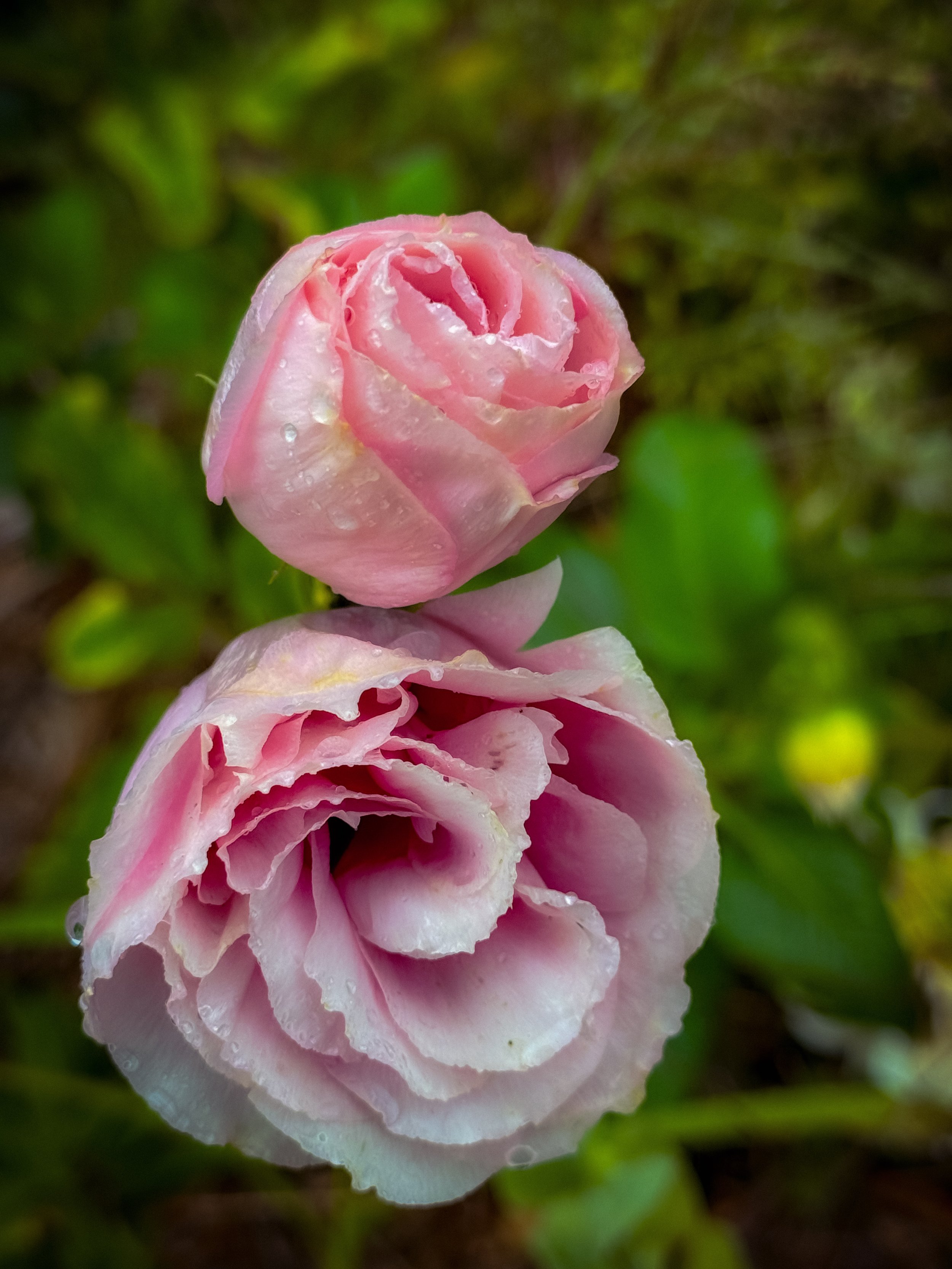
This is why I do it, the beauty and joy I get from surviving the hard, to see the texture, colour, tone, movement, all at once with wonder, it’s a feat.
That's why I grow flowers. Not because it's easy. Not because it's profitable (ask my accountant). But because there's a moment — standing in the field at golden hour, scissors in hand, surrounded by more beauty than any one person deserves — when everything makes sense. When the mud and the early mornings and the aching back and the flooded spring all collapse into a single, undeniable truth.
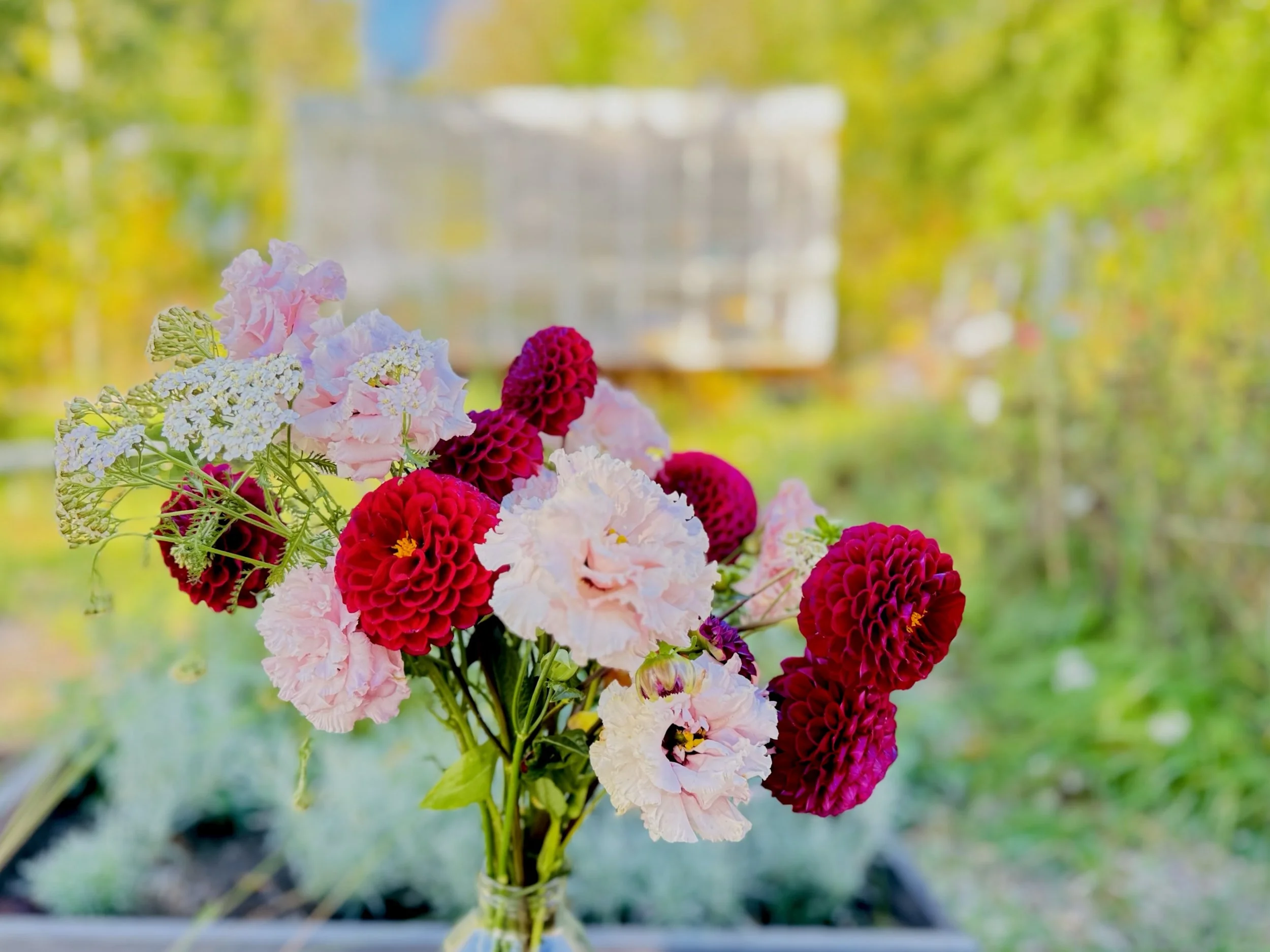
This is exactly where I'm supposed to be. With the dahlias and the lisi’s at sunset when the sky is glowing and my heart is full.
With magic, mud and wonder,
✨ Julianna